
Best Coffee Grinder Under 300: Top Picks for Precision Brewing and Value


Grinding coffee at home gives fresher, more flavorful cups than preground beans. A good grinder lets you control grind size for drip, pour-over, French press, or espresso, and it keeps beans tasting bright by reducing heat and static. Obon, a coffee expert we consulted, stresses that a consistent grind is the single most important factor for reliable brewing at home.
The main choices are blade grinders and burr grinders; burr grinders come in two styles (conical and flat) and in manual or electric models. The most important things to look for are grind consistency, grind settings that match your brew methods, and build quality for durability and low heat buildup. We tested and compared models under $300 to find ones that balance performance, noise, and value for home brewers.
Best Coffee Grinders Under $300
We tested and compared grinders that balance grind quality, speed, and build for home use. Our list focuses on reliable models under $300 that suit drip, pour-over, and espresso setups.
Wancle Grinder

We recommend this if you want a simple, low-cost grinder that handles beans and spices with decent consistency.
Pros
- Fast and powerful for its size.
- Easy one-button use and quick cleanup with included brush.
- Versatile — good for seeds, spices, and small batches of coffee.
Cons
- Lid can feel loose and needs care when moving.
- Small capacity limits larger batches.
- Plastic body feels lightweight and less durable.
We used this for espresso-size doses and morning drip batches. It ground beans quickly and gave a mostly even result for pour-over and French press when we pulsed carefully. The motor is surprisingly solid for a budget blade grinder.
Making spices and seeds into fine powder took only a few seconds. The clear lid helps watch progress so we avoid over-grinding. Noise is noticeable but not disruptive, and the cord length is short on some outlets.
Cleaning required attention around the blade area, but the tiny brush that comes with the unit helped. We found it a practical, compact option for small kitchens or travel, though it won’t replace a high-end burr grinder for precision dialing.
Black+Decker Grinder

We recommend this grinder for shoppers who want a simple, affordable machine that handles coffee and spices well.
Pros
- Fast, even grinding for daily brewing.
- Compact and quiet enough for small kitchens.
- Easy one-touch use and simple to clean.
Cons
- Must hold button for each grind — no timer.
- Blade grinder can’t match burr consistency.
- U.S. plug limits use abroad without an adapter.
We used this grinder every morning for several weeks. It chews through beans quickly and gives a consistent grind for drip coffee when we pulse in short bursts. The stainless steel bowl feels sturdy and cleans up with a quick rinse.
We also tried herbs and spices. The unit handled those fine and saved time over chopping. It stays fairly quiet compared with bigger grinders, which makes early mornings easier.
We noticed one clear limitation: you have to press and hold the button while it grinds. That means more attention than a timed model. For people who want a fast, low-cost option for drip coffee or occasional spice grinding, this hits the mark.
Hamilton Beach Fresh Grind

We recommend this grinder if you want a simple, reliable machine for daily drip or Keurig-style coffee and occasional spice grinding.
Pros
- Fast and easy to use for quick morning grinds.
- Removable bowl makes cleanup simple.
- Small footprint with cord storage keeps counters tidy.
Cons
- Single speed means grind size depends on timing.
- Can be louder and vibrate on hard loads.
- Not ideal for perfectly uniform espresso grinds.
We used this grinder every morning for weeks and found it gets beans to brewable size in seconds. It handled seeds and spices as well, which saved us time when prepping smoothies or recipes.
The removable stainless bowl made emptying and washing painless. We tossed the lid in the dishwasher a few times and it held up, so daily cleanup felt low effort.
Timing mattered a lot. Short bursts gave a coarse result for drip machines, while longer presses produced a finer powder. We learned to pulse carefully to avoid over-grinding.
The motor is punchy for its size, but it can buzz and vibrate when loaded heavily. It fit neatly on our counter and the hidden cord was a helpful touch for a tidy kitchen.
Shardor One Touch Grinder

We recommend this grinder if you want a simple, quiet machine for coffee and spices that is easy to clean and won’t break the bank.
Pros
- Very easy one-touch operation; press to grind, release to stop.
- Removable stainless steel cup makes filling and pouring simple.
- Quieter than many small grinders, so it won’t wake the whole house.
Cons
- Blade grinder limits grind consistency for espresso or precise brewing.
- Small capacity means multiple batches for larger needs.
- Finger-press control can be tiring for long grinding sessions.
We used this on beans and spices and liked how straightforward it felt. The one-touch press is instant and predictable. Stopping when you want is as simple as lifting your finger.
We found the stainless steel bowl a big plus. It slides in and out easily, rinses clean, and doesn’t hold odors like plastic. Pouring grounds into a portafilter or jar was hassle-free.
Grinding was quieter than expected at about household conversation level. For drip and French press it did a fine job, though we noticed finer and more even grinds were hard to achieve for espresso. Small batches worked best; larger amounts meant we ground twice.
This grinder handled spices, seeds, and nuts without complaint. The blades are sharp and feel durable, but expect a coarser mix compared with burr machines. For the price and noise level, it’s a solid everyday grinder.
Shardor Burr Grinder
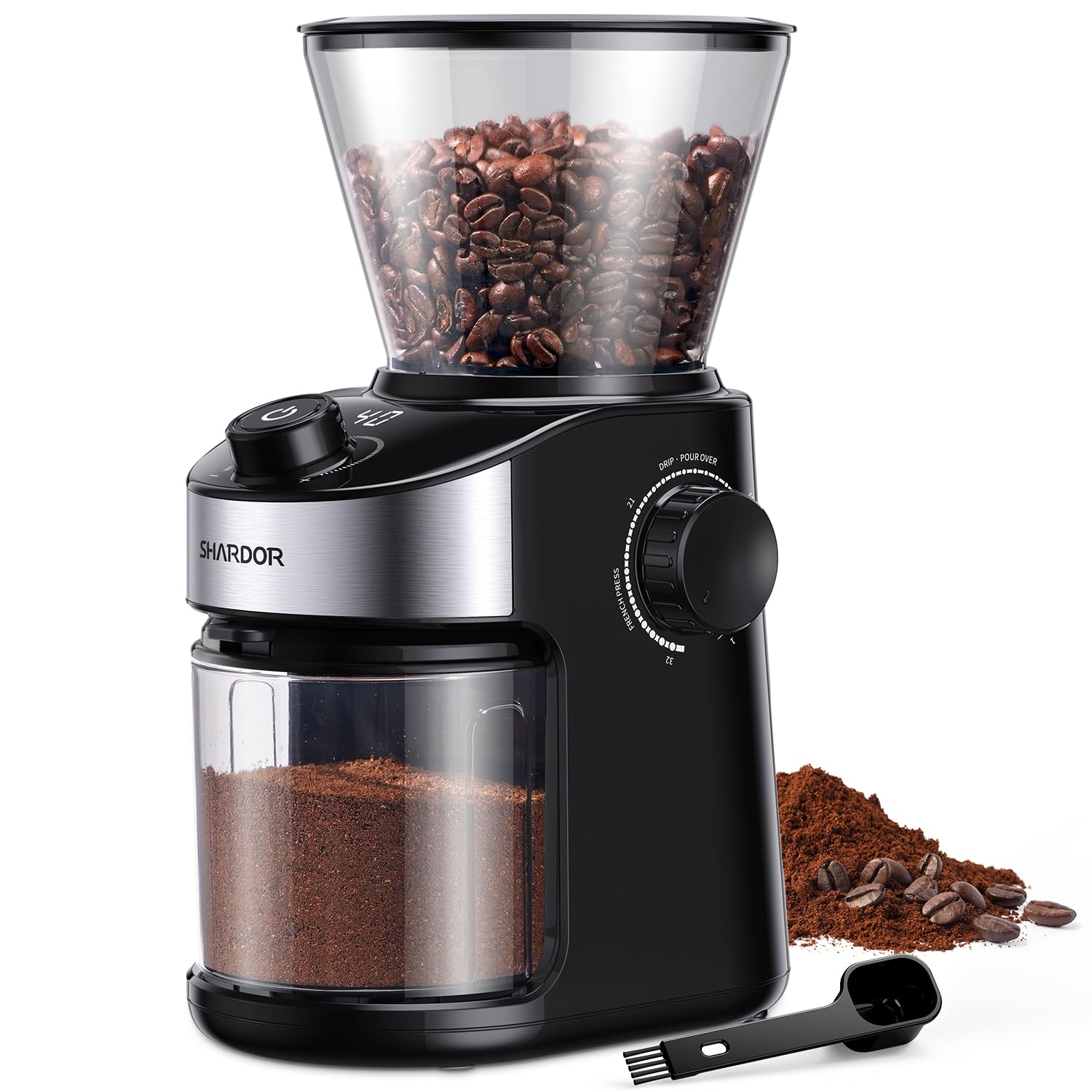
We recommend this grinder if you want consistent grinds and a compact machine for daily home use.
Pros
- Produces even grounds thanks to metal flat burrs.
- Lots of grind settings let us shift from espresso to French press.
- Digital timer makes single-button dosing easy.
Cons
- Small grounds chamber means we grind in batches.
- Mostly plastic body feels less durable than metal.
- Motor needs cooling if we run it too long.
We used this for several weeks and liked how even the grounds came out. Espresso puck and pour-over extraction both tasted balanced. Changing settings felt precise and repeatable.
The digital timer is handy. We tapped one button and got consistent doses without guessing. The 32 grind sizes gave clear steps between fine and coarse.
Cleaning was simpler than expected. The removable upper burr and small brush help, though the plastic parts feel light. For everyday home use this unit saves counter space and performs well if we stick to small batches.
Shardor Silent Blade Grinder
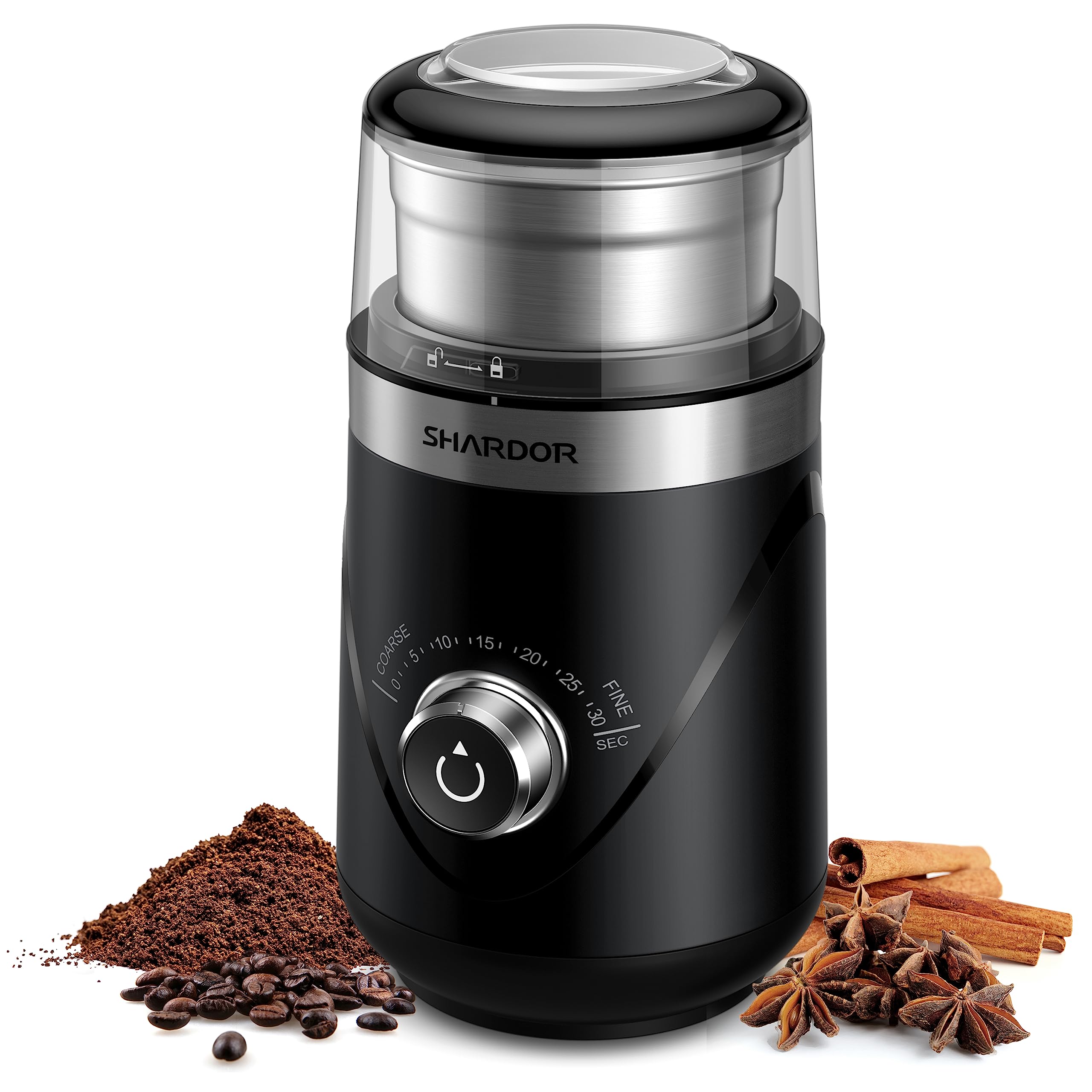
We recommend this grinder if you want a quiet, simple machine under $300 that handles both coffee and spices well.
Pros
- Very quiet compared to similar blade grinders
- Removable stainless steel cup makes dumping and cleaning easy
- Timed knob gives useful coarse-to-fine control
Cons
- Blade design can produce uneven grounds for some brews
- Base can move on the counter during use
- A few users report reliability issues after long use
We used this grinder daily for small batches and liked how little noise it made. Early mornings felt less disruptive, and the timed knob let us aim for a grind that worked for drip and French press trials.
The removable cup made transfer and cleanup fast. We tossed beans straight into the bowl, ground them, and unlocked the cup to dump into our jar without messy edges.
Grinding spices worked well too. Cardamom, pepper, and cinnamon ground quickly, though the blade action meant the texture varied more than a burr grinder would.
The unit is compact and light, so it fits in small kitchens and travels easily. Do expect some wobble on slick countertops and watch for mixed reports about long-term durability.
Overall, this grinder gives good value for casual home users who want low noise and easy cleaning without spending much.
KRUPS Precision Grinder (3 oz)

We recommend this grinder if you want a simple, affordable way to grind beans and spices at home.
Pros
- Fast and easy one-touch operation.
- Small footprint fits neatly on our counter.
- Versatile for coffee, spices, and nuts.
Cons
- Blade grinders give less even particle size than burrs.
- Can get noisy during use.
- Not ideal for very fine espresso grind consistency.
We used this KRUPS a few times for morning coffee and for grinding spices for dinner. It felt solid in our hands and the lid locks securely before the blades spin, which made us comfortable using it around kids.
Grinding a single dose was quick. We found that holding the button in short bursts gave us more control over coarse or medium grinds. For French press and drip coffee it worked well, and it handled peppercorns and seeds without a fuss.
Cleanup was straightforward; a quick brush and wipe left the chamber ready for the next use. If you need ultra-fine, even espresso grounds, a burr grinder would suit better, but for daily coffee and kitchen use this KRUPS is a handy, budget-friendly choice.
Rsoilch Manual Grinder
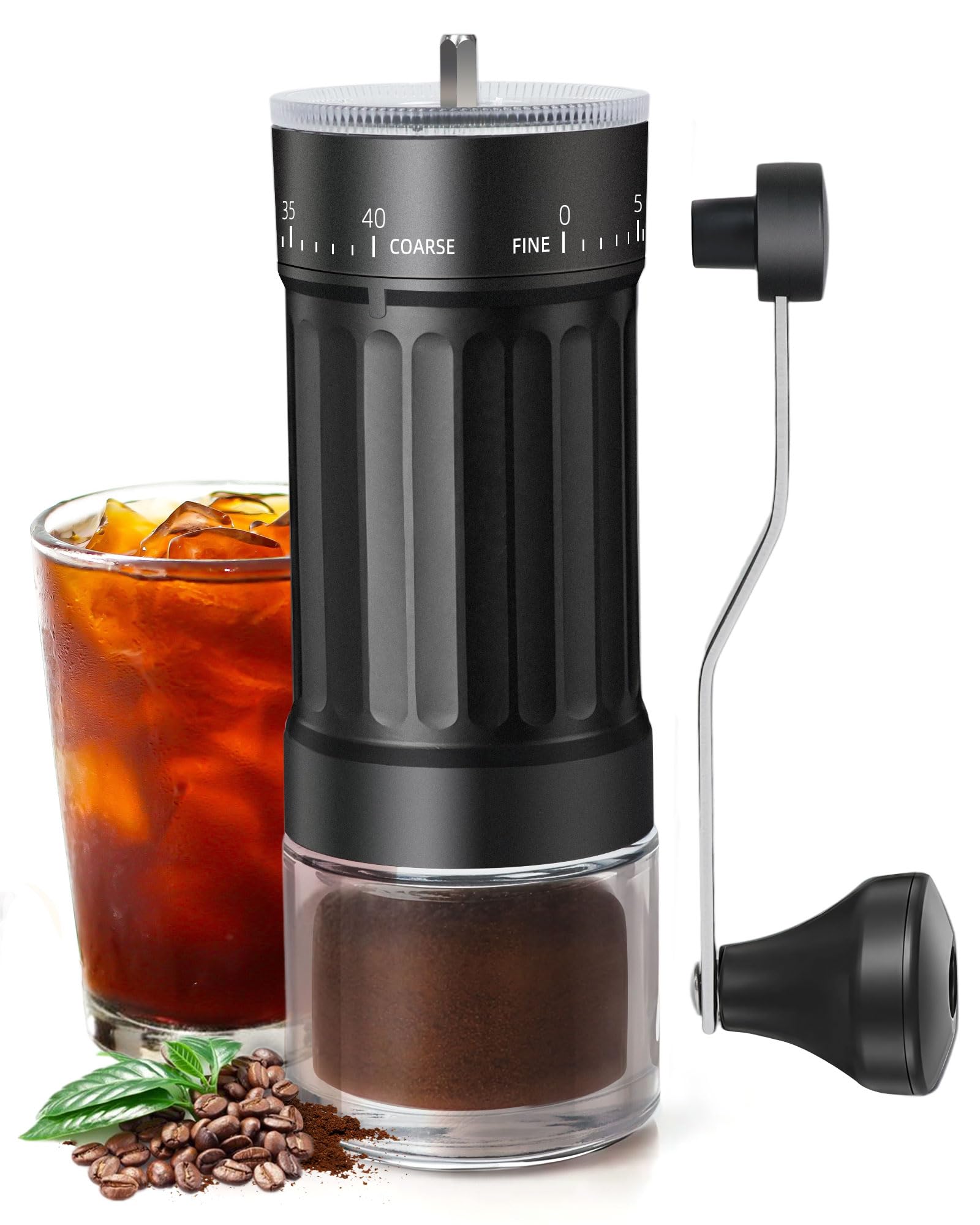
We recommend this if you want a small, reliable hand grinder that gives consistent results for many brew styles.
Pros
- Easy to dial in grind size with 40 settings.
- Ceramic burr gives uniform grounds and stays sharp.
- Compact and sturdy for travel or small kitchens.
Cons
- Hand cranking gets tiring for more than a couple shots.
- Small capacity means frequent refills for larger batches.
- Long handle can make the motion feel awkward at first.
We used this grinder for a week and liked how steady the grind felt. The ceramic burr produced even grounds for pour-over and French press. Adjusting between fine and coarse was smooth and repeatable.
Grinding for espresso was possible, but we noticed it takes extra effort and time. The handle is long and feels a bit stiff until broken in. For a single or double shot it worked fine, but not for large daily volumes.
Taking it camping and using it at home showed the unit’s strength: solid stainless body and a glass catch that keeps beans tasting clean. If you want a quiet, manual option under $300 that actually grinds well, this is worth trying.
Cuisinart Supreme Grind Burr Grinder
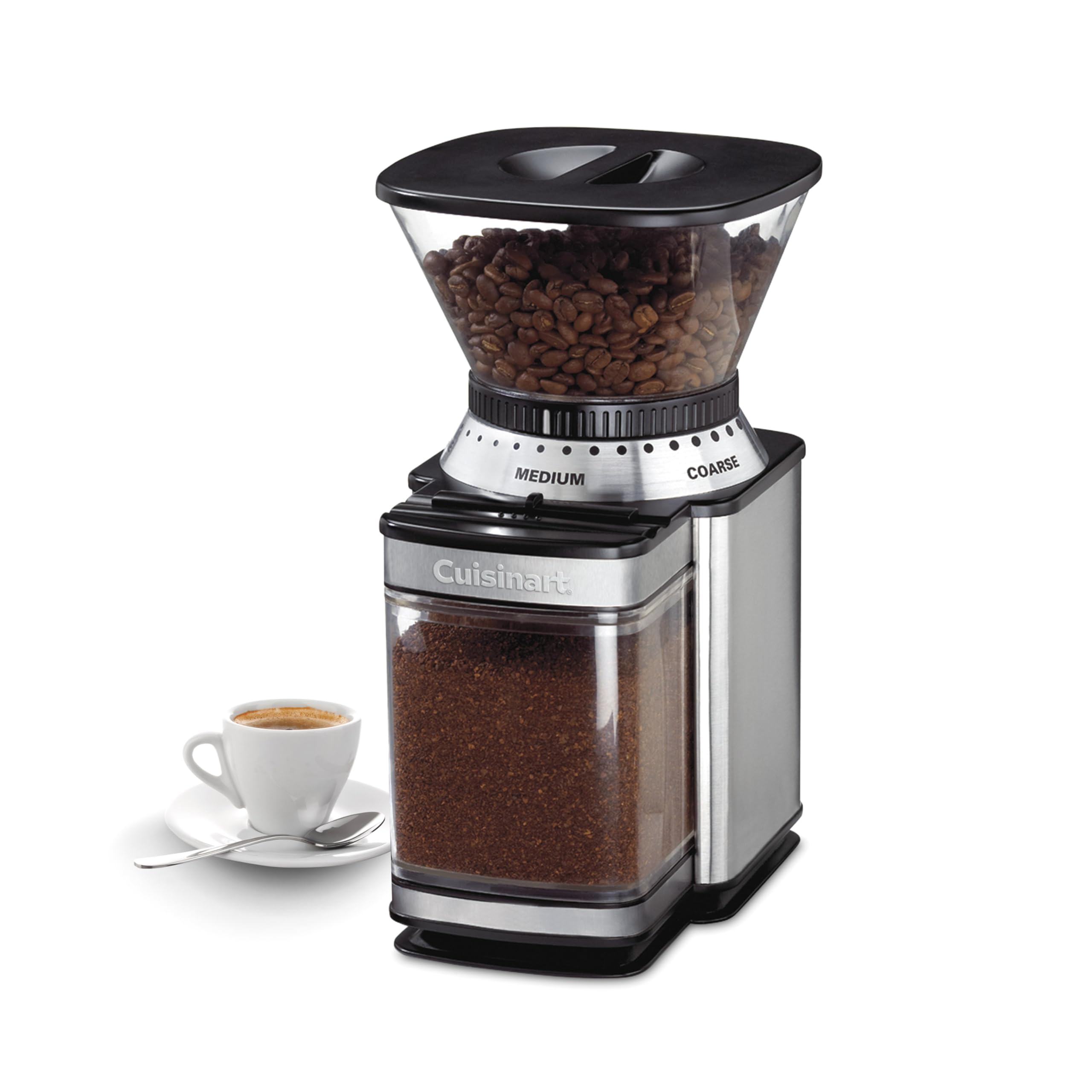
We recommend this grinder if you want a reliable, easy-to-use burr grinder under $300 that makes consistent coffee for drip or French press.
Pros
- Solid, sturdy build that feels like it will last.
- Simple one-touch operation with lots of grind settings.
- Removable parts make cleaning quick.
Cons
- Louder than newer models when grinding.
- Coarse settings can feel a bit limited for some methods.
- Occasional quality-control issues reported by other buyers.
We used this on a daily basis for a couple weeks and liked how it handled different beans. The 18 grind positions let us move from espresso-fine to coarse for French press without guessing. Grinding felt steady and produced even grounds more often than blade grinders.
The one-touch timer made morning routine faster. We set the cup size, hit the bar, and walked away while it stopped on its own. Emptying and rinsing the hopper was straightforward since the pieces pop off easily.
Noise was the main drawback for us. It wakes the house and startled the cat a few times. Also, for very coarse grinds we sometimes nudged the dial a hair to get the texture we wanted, so expect to tweak settings by brew method.
If you want to read more or buy it, check the product page: Cuisinart Supreme Grind Burr Grinder.
Hamilton Beach Fresh Grind

We recommend this grinder if you want a simple, affordable tool that makes fresh coffee and grinds spices without fuss.
Pros
- Small footprint that fits on a crowded counter.
- Removable bowl makes cleanup quick.
- Grinds beans and seeds fast.
Cons
- Single speed means grind size takes practice.
- Can be louder than expected for morning use.
- Not ideal for very fine espresso-level grinds.
We used this grinder for a few weeks and liked how quickly it turned whole beans into a fresh cup. The lid snaps on and the one-button control is simple — press to grind, release to stop. It handled seeds and spices the same way, which saved us a step when prepping smoothies.
The removable stainless steel bowl really helped with cleanup. We rinsed it and the lid went in the dishwasher easily. Emptying grounds was tidy, and the hidden cord storage kept our counter neater when not in use.
We did notice the single-speed blade needs short bursts for coarse grinds and longer holds for fine ones, so timing matters. It’s loud at peak power and won’t replace a precision burr grinder for true espresso, but for drip, French press, or seasoning tasks it performs well.
Buying Guide
We focus on the features that matter when choosing a coffee grinder under $300. We want a grinder that fits our brewing style and daily routine.
Look at grind type first. Burr grinders give steady particle size and better extraction. Blade grinders are cheaper but uneven, so choose burr if we care about flavor.
Consider grind settings and consistency. More settings let us dial in espresso to French press. Check for stable, low-speed motors to reduce heat and protect aroma.
Think about capacity and size. A larger hopper works for batch grinding. A compact model fits small kitchens. Match capacity to how much coffee we drink each day.
Noise and build quality matter. Metal burrs last longer than ceramic. Solid housing and easy-to-clean parts make daily use simpler.
Check extra features. Timers and dosers save time. Stepless adjustments give fine control. Removable parts speed cleaning and maintenance.
Use this quick comparison table to weigh priorities:
| Feature | Why it matters | What to choose |
|---|---|---|
| Grind type | Consistency affects taste | Burr, conical or flat |
| Settings | Flexibility for brew methods | Many steps or stepless |
| Motor speed | Heat and noise control | Lower RPM preferred |
| Capacity | Matches consumption | Small for single users, large for groups |
| Durability | Long-term value | Metal burrs, solid build |
| Ease of cleaning | Keeps performance | Removable parts, simple assembly |
We recommend testing feel and noise in person if possible. Read user reviews about reliability and customer support before buying.
Editor’s Choice
We picked the Baratza Sette 270Wi as our Editor’s Choice. It balances speed, grind consistency, and useful features for most home brewers.
We like its straight-through burr design and precise stepless adjustment. This gives very consistent grounds for espresso and other brew methods without long waits.
The 270Wi has a built-in scale option and smart grind-by-weight dosing. That saves time and reduces waste when we dial in shots.
Pros include fast grind rate, minimal retention, and easy cleaning. Cons are a higher price within this list and a learning curve for the digital dosing.
Key specs at a glance:
- Burrs: 40 mm steel
- Adjustment: Stepless
- Dose: Grind-by-weight (optional built-in scale)
- Retention: Low
- Price: Under $300 (depends on retailer)
We recommend the Sette 270Wi for home users who want reliable espresso performance and value precise dosing. It also scales well for pour-over and other methods, so it suits a range of routines.
FAQS
What grind type do we need for different brews?
We match grind size to brew method. Use coarse for French press, medium for drip, and fine for espresso. Many grinders under $300 handle these ranges.
How important is burr vs blade?
Burr grinders give consistent particle size. We prefer burrs because they extract flavor evenly. Blade grinders are cheaper but less reliable.
How much should we spend for good quality?
Under $300 buys a solid home grinder. We get durable burrs, good speed control, and steady performance in this range.
Are grinders noisy or slow?
Noise varies by motor and burr type. Conical burrs often run quieter. We recommend checking decibel levels if noise matters.
How do we maintain a grinder?
Clean the hopper and burrs regularly. Use a brush and occasional grinder cleaner pellets. Keep beans dry and store them in a sealed container.
Can we grind for multiple brew methods at once?
Most grinders let us switch settings but not grind for two methods at the same time. We change settings between grinds and wipe out leftover grounds.
What should we look for in a warranty?
Aim for at least 1–2 years of coverage on motor and burrs. We check customer service reputation before buying.
Quick checklist:
- Burr type: conical or flat
- Grind range: fine to coarse
- Hopper capacity and ease of cleaning
- Warranty and customer support
Conclusion
We chose grinders that give consistent grind, good build quality, and useful features without breaking the bank. Each option fits different needs: manual for travel, blade for occasional use, and burr for daily brewing.
Our top picks balance grind size range and durability. We favor burr grinders for better taste and control, especially if you brew with pour-over or espresso.
We also considered noise, hopper capacity, and ease of cleaning. These factors matter for daily use and long-term satisfaction.
Use this quick checklist to match a grinder to your needs:
- Budget under $300
- Preferred brew method (espresso, drip, French press)
- Grind consistency and adjustability
- Hopper size and ease of cleaning
- Noise level and footprint
We recommend testing grind settings with the beans you buy most often. Small adjustments can change flavor a lot, and a grinder that lets you fine-tune will serve you well.
If you want one simple pick: choose a burr grinder with stepping or continuous adjustment and a solid warranty. It gives reliable results across brew methods and lasts longer than cheaper alternatives.