Best Coffee Grinder for Small Kitchen: Compact, Quiet, and High-Performance Choices

Coffee can taste its best when beans are ground just before brewing. A good grinder lets home brewers control grind size for drip, pour-over, AeroPress, or espresso, which changes extraction and flavor. Obon, a coffee expert, notes that grind consistency and fresh aroma matter most for small kitchens where counter space is limited.
Space, noise, and grind type are the key things to watch when buying a grinder for a small kitchen. Burr grinders give steady particle size and better flavor but can be bulkier and pricier; blade grinders are compact and cheap but make uneven grinds. Choose a grinder that matches the brewing methods you use, fits your countertop or storage space, and runs quietly enough for daily use.
This guide tests and compares compact options to find grinders that balance size, performance, and value for small kitchens, and it highlights the best picks, buying tips, and an editor’s choice.
Best Coffee Grinders for Small Kitchens
This list shows compact, reliable coffee grinders that save counter and cabinet space. Each pick balances grind quality, size, and ease of use to fit small kitchens without sacrificing flavor.
Wancle Mini Grinder

It is a good budget option for a small kitchen because it grinds beans and seeds quickly and takes very little counter space.
Pros
- Small footprint fits tight counters.
- Fast, even grind for quick daily use.
- Multi-use for coffee, spices, and seeds.
Cons
- Plastic lid can feel loose when moving it.
- Needs cleaning after each use to avoid residue.
- Cord length may be short for some outlets.
The first time they used this grinder it felt light and easy to handle. It sat neatly beside the kettle and did not clutter the counter. Grinding a single dose of beans took only a few seconds and smelled fresh.
They noticed the grind was fairly uniform for drip and French press. Press-and-hold one-button control made it simple to stop at the right texture. The motor ran smoothly and did not overheat during short bursts.
Cleaning required more attention than the machine’s size suggested. Bits of grounds clung to the bowl and needed the small brush included. The lid’s loose fit meant they had to hold it steady when pouring or moving the unit.
For someone who needs a cheap, compact grinder for daily small batches, this works well. It pairs best with whole beans or seeds and avoids heavy, continuous grinding sessions.
BLACK+DECKER Coffee Grinder

It is a solid, small grinder for simple daily use that fits tiny kitchens and handles beans, spices, and herbs well.
Pros
- Compact footprint fits in small cabinets or on tight counters.
- Quick, even grind for drip coffee and spices.
- Easy one-touch operation and simple to clean.
Cons
- Needs a hand held down for timed control; no auto-timer.
- Blade grinder can’t match burrs for precision or espresso.
- U.S. plug only—buyers outside the U.S. must check compatibility.
They kept the unit small and light so it tucks into a drawer or sits beside the kettle without crowding the counter. It felt sturdy when used and the stainless steel bowl wipes clean fast after grinding a few tablespoons of beans.
Using the one-touch button, it ground a morning dose in under 10 seconds. The grind looked consistent enough for a drip machine, and it handled dried herbs and spices with no fuss. Noise stayed moderate; not silent but not annoying.
He did have to hold the button for short bursts to avoid over-grinding. For anyone wanting very fine, uniform grinds for espresso, this blade model will fall short. Overall, it feels like a dependable, low-cost option for small kitchens that need space-saving gear.
Hamilton Beach Fresh Grind

It’s a solid buy for someone who needs a compact, no-fuss grinder that handles beans, spices, and seeds well.
Pros
- Small footprint that fits tight counters and cabinets.
- Removable stainless steel bowl makes cleanup quick.
- Reliable single-button use—easy to control grind time.
Cons
- One speed only, so grind consistency depends on timing.
- Can be noisy and vibrate on hard surfaces.
- Not for ultra-fine espresso-level grinding.
They used it daily and found the size very handy. Filling the bowl felt simple and pouring grounds into a filter was tidy thanks to the tapered shape.
Grinding happens fast. A few short pulses made a coarse grind for drip, while longer presses worked for finer grounds. It handled peppercorns, seeds, and flax without jammed bits.
Cleanup was genuinely easier than expected. The removable bowl and dishwasher-safe lid saved time, and the hidden cord made the counter look neater.
It did hum louder than some higher-end models. Placing it on a thick mat cut vibration, but it still sounded like a typical blade grinder. For someone who wants convenience and low cost, it delivers.
Shardor One Touch Grinder

This grinder is worth buying for a small kitchen if someone wants a compact, easy-to-clean electric grinder that handles coffee beans and spices well.
Pros
- Small footprint fits tight counters.
- Removable stainless cup cleans fast.
- Simple one-touch control is quick to use.
Cons
- Blade grinder can clump with very oily beans.
- Short runs require steady finger pressure.
- Not as quiet as manual mills for very early mornings.
They used this grinder for both coffee and spices and liked how little counter space it took. The stainless steel bowl felt solid and popped into the dishwasher without fuss. It ground beans quickly and made espresso-fine powder when pulsed a few times.
Noise stayed around normal kitchen levels, not whisper-quiet but not startling either. Press-and-hold operation worked reliably, though holding the lid down for long times can feel a bit fiddly. The lid design gave a secure hold during use.
Cleaning took only a minute since the cup removed easily and the blades wiped clean. It handled seeds, pepper, and nuts with no trouble, which made it handy for small-batch cooking. For someone with limited space who wants a multi-use grinder, this felt like a practical, no-nonsense choice.
Proctor Silex Fresh Grind
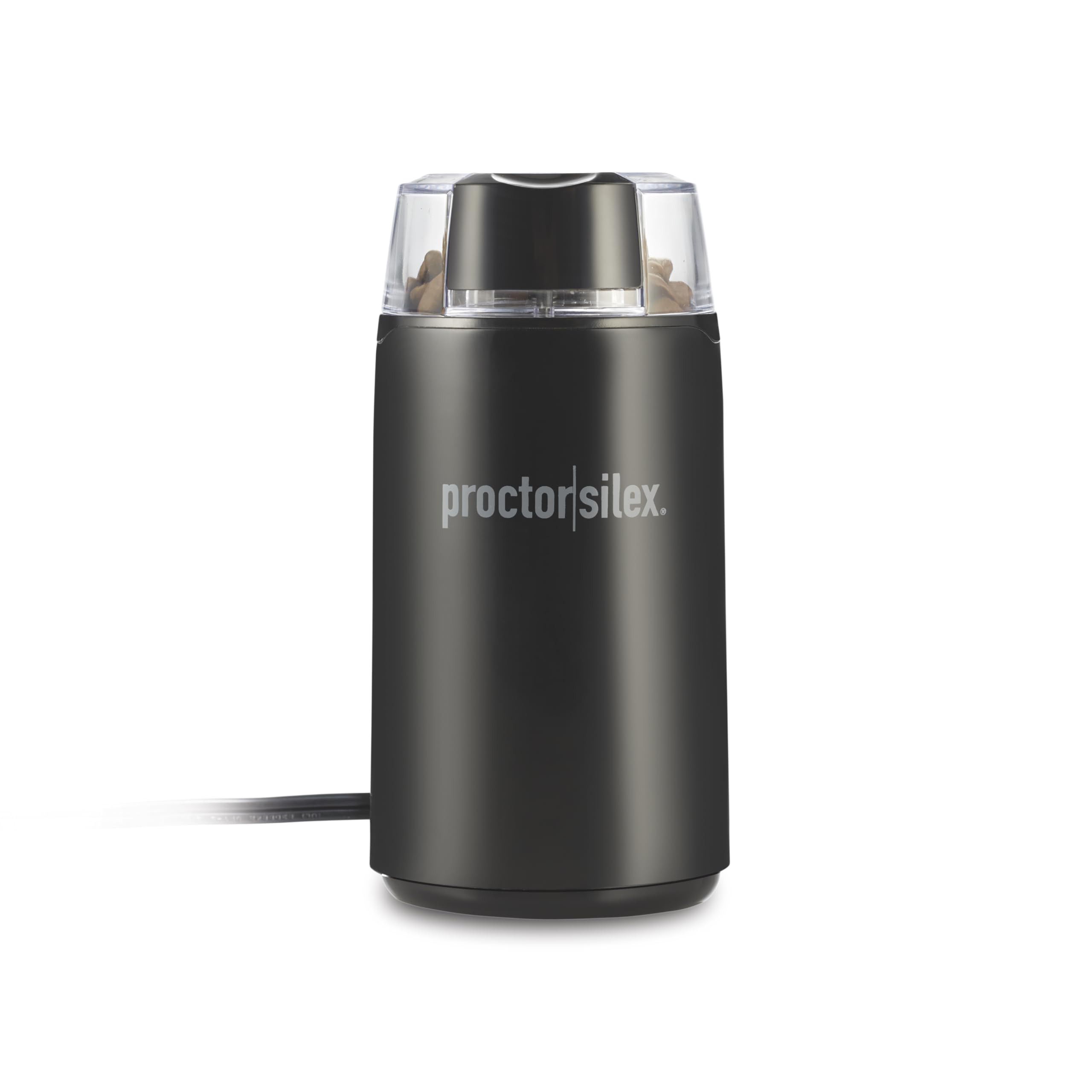
This grinder is worth buying if you want a compact, no-frills machine that quickly grinds beans for drip coffee and fits tight counter space.
Pros
- Simple one-button use that feels intuitive.
- Small footprint that fits easily on a crowded counter.
- Durable stainless steel blades that grind fast.
Cons
- Loud during use, especially on hard beans.
- Small capacity means multiple batches for larger pots.
- Blade grinder limits control over grind size.
They kept the design basic and it works exactly as expected. He pressed the top, watched beans turn to grounds in seconds, and the cleanup took less than a minute. The safety interlock gave a steady feel when snapping the lid on.
The grinder’s size is its main selling point. She stored it in a cabinet and pulled it out for morning coffee without rearranging the counter. For someone with a tiny kitchen, that convenience matters.
Grinding felt powerful but blunt. It produced consistent grounds good for drip coffee and French press in short bursts, but it could not match the precision of a burr grinder for espresso. The motor runs loud, but only for a few seconds each use.
It doubled as a spice grinder when needed. He crushed peppercorns and seeds quickly, which saved extra tools in a small kitchen. Users should watch capacity and pulse short times to avoid over-grinding or overheating.
SHARDOR Super Silent Grinder
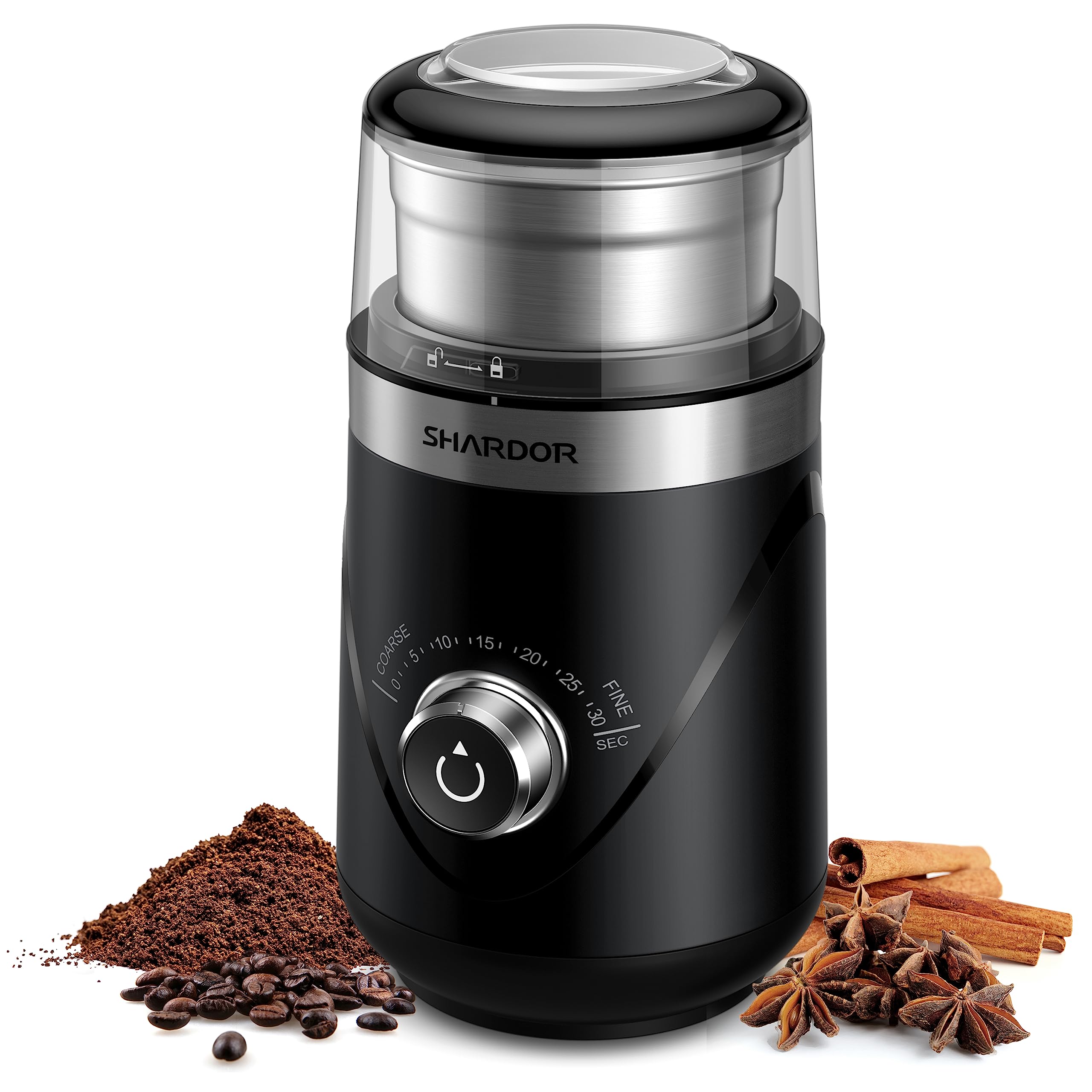
It is a solid choice for small kitchens because it grinds beans quietly, stores on a small counter, and can handle spices too.
Pros
- Quiet operation compared with similar blade grinders
- Removable stainless steel cup makes cleaning simple
- Timed knob gives decent control from coarse to fine
Cons
- Blade grinder won’t match burr consistency for espresso
- Can vibrate or move on the counter during use
- Some units have occasional reliability issues
It felt compact on the counter and fit easily under my cabinets. The 2.5 oz bowl holds enough beans for several cups, so it did fewer runs than expected. Using the rotary timer made repeatable results easy for drip or French press.
Grinding was noticeably quieter than basic models. The motor hummed around 60–65 dB, so it did not wake people nearby. It still buzzed when full, and the unit moved a bit if placed on a slick surface, so a mat helped.
Cleaning was painless thanks to the removable stainless cup. That bowl snaps out and empties without scattering grounds. It also worked well on spices; parsley and pepper ground fine for cooking.
Overall, it feels like a practical, small-kitchen grinder for daily use if a blade grinder fits the buyer’s needs. It won’t replace a burr for espresso, but it offers compact, quiet performance and easy cleanup.
Amazon Basics Fast Grinder

It is a solid, no-frills grinder for small kitchens that grinds quickly and stows away easily.
Pros
- Fast grind time for one to two cups.
- Small footprint fits tiny counters or cabinets.
- Multi-use for spices, seeds, and grains.
Cons
- Blade grinder gives uneven grind for espresso.
- Can be noisy and vibrates on thin surfaces.
- Plastic lid may crack if dropped.
They designed this little grinder to sit on a crowded counter and disappear. It barely takes up room and is simple to press and go. In a small kitchen, that ease and size really matter.
Grinding a single ounce of beans takes about 10 seconds when he uses short pulses. The cup clears quickly and the results work great for drip and French press when he watches the grind closely. He noticed some fines and larger bits, so it is not the choice for precise espresso settings.
Cleaning is quick because the chamber is shallow and the blade is exposed. She wipes it out with a brush and a damp cloth; no complicated parts to fuss with. The lid’s safety latch gives peace of mind, but it feels lightweight compared with higher-end grinders.
Overall, it performs like a budget workhorse: fast, compact, and versatile for more than just coffee. For someone in a small kitchen who wants simple, quick grinding without extra features, it’s an easy pick.
Hamilton Beach Fresh Grind

It’s a compact, no-frills grinder that works well for daily coffee and small-batch spice grinding, especially when counter space is tight.
Pros
- Small footprint with hidden cord storage
- Easy to use and quick to grind
- Removable bowl makes cleanup simple
Cons
- One-speed operation limits grind control
- Can be a bit loud and vibrate on hard surfaces
- Not ideal for very fine, uniform espresso grind
They dropped this on the counter and tested beans for drip and a Keurig-style brew. It ground fast and evenly for daily cups. Filling and pouring felt tidy thanks to the removable stainless bowl.
They tried seeds and spices next. The blades handled flax, sesame, and peppercorns without stalling. Cleanup was straightforward because the bowl and lid are easy to rinse or toss in the dishwasher.
They used it for a few weeks and noticed limits. Long presses gave finer grinds but not the consistent powder an espresso machine needs. It also buzzed louder on thin countertops, so a mat helps reduce vibration.
Krups Precision Grinder

It is a solid buy for small kitchens that need a compact, reliable grinder for both coffee and spices.
Pros
- Small footprint fits easily on crowded counters or in cabinets.
- Grinds quickly with a strong motor for coffee and spices.
- Simple one-touch use makes morning routines faster.
Cons
- Blade design gives slightly uneven grind for espresso-level fineness.
- Can be noisy during use, so it wakes light sleepers.
- Plastic body feels less durable than metal alternatives.
They kept one on a tiny counter and it worked like a kitchen workhorse. It handled morning coffee doses and a handful of spices for a recipe without fuss. Emptying and brushing out the chamber after use took only a minute.
They found the grind control depends on timing. Coarse to medium comes out consistent for French press or drip. For very fine espresso, it needed extra pulses and patience, which sometimes made grounds uneven.
Using it for spices made meal prep faster. The lid safety feature reassured them while loading seeds or nuts. Overall, it saves space and time for people who want a no-frills, multi-use grinder.
Cuisinart DBM-8 Burr Grinder
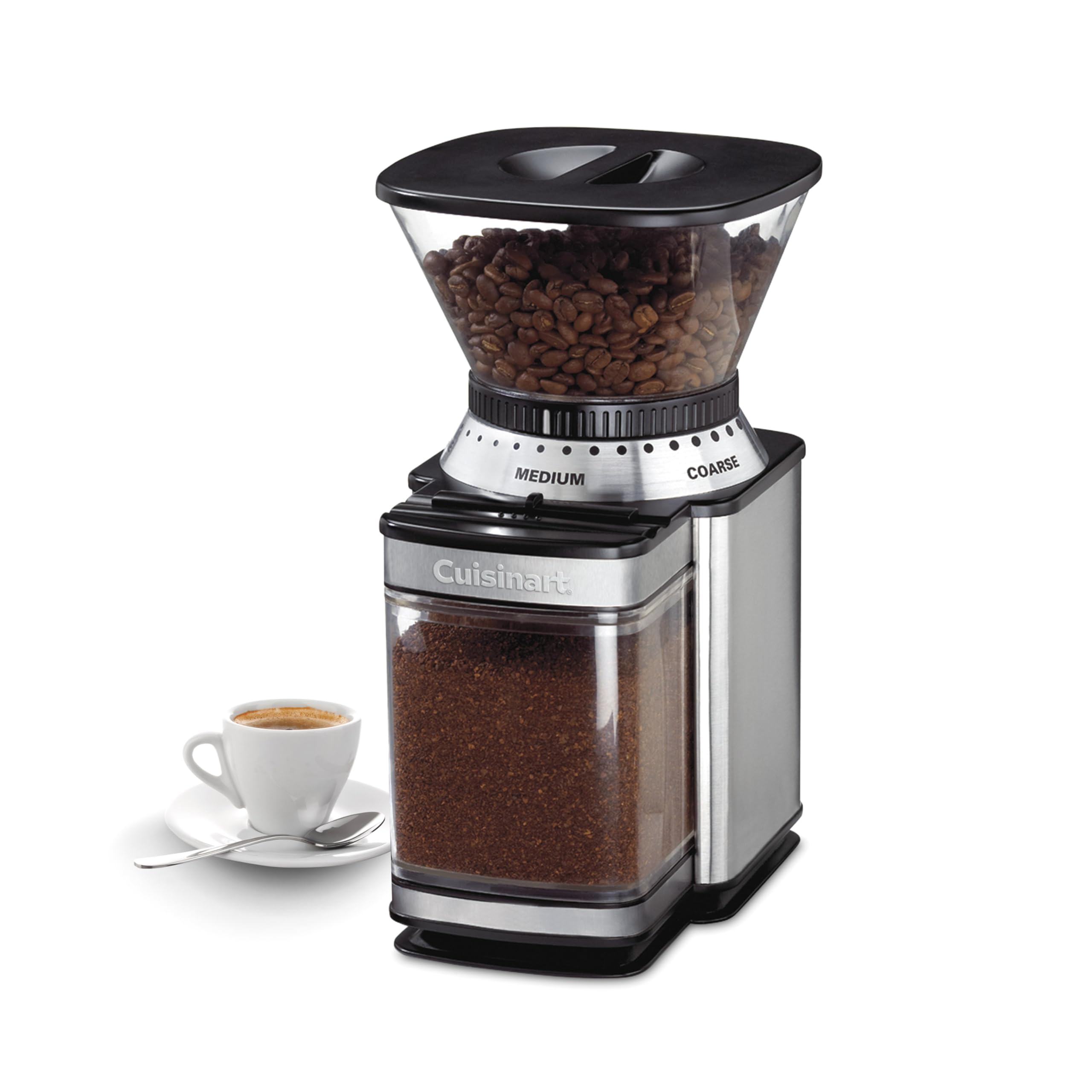
It is a solid choice for someone who wants consistent, fresh grinds in a small kitchen without spending too much space or effort.
Pros
- Makes even grinds across many settings.
- Removable parts make cleaning quick.
- Compact footprint fits tight counters.
Cons
- Motor is fairly loud during use.
- Coarse settings can be uneven at times.
- A few units have had reliability problems.
This grinder feels heavy and well built on the counter. It fits in a small space and does not look out of place next to a compact coffee maker.
Using the 18-position dial gave clear control from espresso-fine to coarse filter grinds. The one-touch timer stopped exactly when expected, so it was easy to get repeatable doses.
The removable hopper and grind chamber made cleanup simple after daily use. Expect some noise when it runs, and test the coarse range if you prefer very large grinds.
Buying Guide
Choose a grinder that fits the kitchen size and storage space. Measure the counter or cabinet space before buying so it will fit easily.
They should pick a grind type that matches brewing methods. Burr grinders give consistent sizes for drip, espresso, and French press. Blade grinders are cheaper but less even.
Look for grind settings and ease of use. A wide range of settings helps dial in taste. Simple controls and clear markings save time each morning.
Consider capacity and noise level. Small hoppers hold less but take up less room. Quieter models are better in shared spaces or early mornings.
Check build quality and cleaning steps. Metal burrs last longer than cheap parts. Removable hoppers and easy-to-wipe surfaces make maintenance faster.
Evaluate power and speed for real needs. Higher wattage can grind faster but may be bulkier. Slow, low-speed grinding reduces heat that can change flavor.
Review safety features and warranty details. Automatic shutoff and secure lids prevent spills and accidents. A clear warranty gives peace of mind.
Compare price against needed features. More features cost more, but basic, reliable machines can suit many kitchens. Use a table to weigh trade-offs.
| Feature | Why it matters |
|---|---|
| Grind type | Consistency affects flavor |
| Size & capacity | Fits kitchen and daily use |
| Noise | Comfort in small living spaces |
| Ease of cleaning | Saves time and keeps grinder working |
| Settings | Flexibility for different brews |
| Power & speed | Balance performance and heat |
| Safety & warranty | Protects investment and users |
Editor’s Choice
The Breville BCG820 is the editor’s pick for small kitchens. It offers consistent grind size and a small footprint that fits tight counters.
It has conical burrs that reduce heat and preserve flavor. The hopper holds just enough beans for daily use, so it does not take up much space.
Controls are simple and clear. Users can choose grind size and dose with repeatable results.
Maintenance is straightforward. Parts that contact beans detach for quick cleaning.
Key features:
- Type: Conical burr grinder
- Footprint: Compact, countertop-friendly
- Dose control: Digital timer with manual override
- Noise level: Moderate for a burr grinder
It balances performance and size, making it a strong choice for those who want quality coffee without a large appliance.
FAQS
What size grinder fits a small kitchen?
A compact grinder under 8 inches tall and with a small footprint works best. It should fit under cabinets and on a small counter without crowding other items.
Blade vs. burr — which is better for small spaces?
Burr grinders give more consistent grind size and better flavor. Blade grinders take less space and cost less, but they are less precise.
Can a small grinder make espresso and drip coffee?
Some compact burr grinders offer fine settings for espresso and coarser for drip. Check the grind range before buying to be sure it meets both needs.
How much noise should be expected?
Most grinders make noticeable noise. Burr grinders tend to be quieter than high-speed blade models, but sound levels vary by motor and design.
Is cleaning difficult in a small model?
Many small grinders have removable parts that make cleaning easy. A brush and a quick wipe often keep the grinder in good condition.
How many cups can a small grinder handle?
Compact grinders usually hold enough beans for 1–6 cups in one go. If more capacity is needed, look for a slightly larger hopper or grind in batches.
What features matter most?
Look for durable burrs, easy controls, a small footprint, and a removable hopper or grounds bin. These features balance performance and convenience.
Are electric or manual grinders better for tiny kitchens?
Manual grinders are very small and quiet but need physical effort. Electric grinders are faster and easier for daily use. Choose based on space and routine.
Conclusion
A compact grinder lets a small kitchen keep fresh coffee without losing space. It fits on a counter or tucks into a cabinet, and it makes daily grinding simple.
They should pick a grinder that matches their brew method. Burr grinders give consistent grinds for pour-over and espresso, while a quality blade grinder can work for drip coffee on a tight budget.
Noise, size, and ease of cleaning matter in small kitchens. Quieter models reduce disruption. Removable parts and straightforward designs save time.
Consider these quick checks before buying:
- Capacity: enough for daily use but not oversized.
- Footprint: fits available counter or shelf space.
- Grind range: suits the coffee styles they prefer.
- Build and warranty: durable and backed by support.
A final tip: they don’t need the most expensive model to get better coffee. Choosing the best fit for space and brewing habits gives the most value.