What Are Coffee Grinder Clicks: Meaning And Tips


Coffee grinder clicks are the audible notches or detents that mark grind-size steps on many grinders.
I’ve spent years testing grinders and teaching home baristas how to dial in espresso and drip. This article explains what are coffee grinder clicks, why they matter, how they work, and how to use them to get consistent coffee. You’ll get clear, practical advice, troubleshooting tips, and real-world examples so you can hear, feel, and use those clicks to make better coffee.
What are coffee grinder clicks? A clear definition
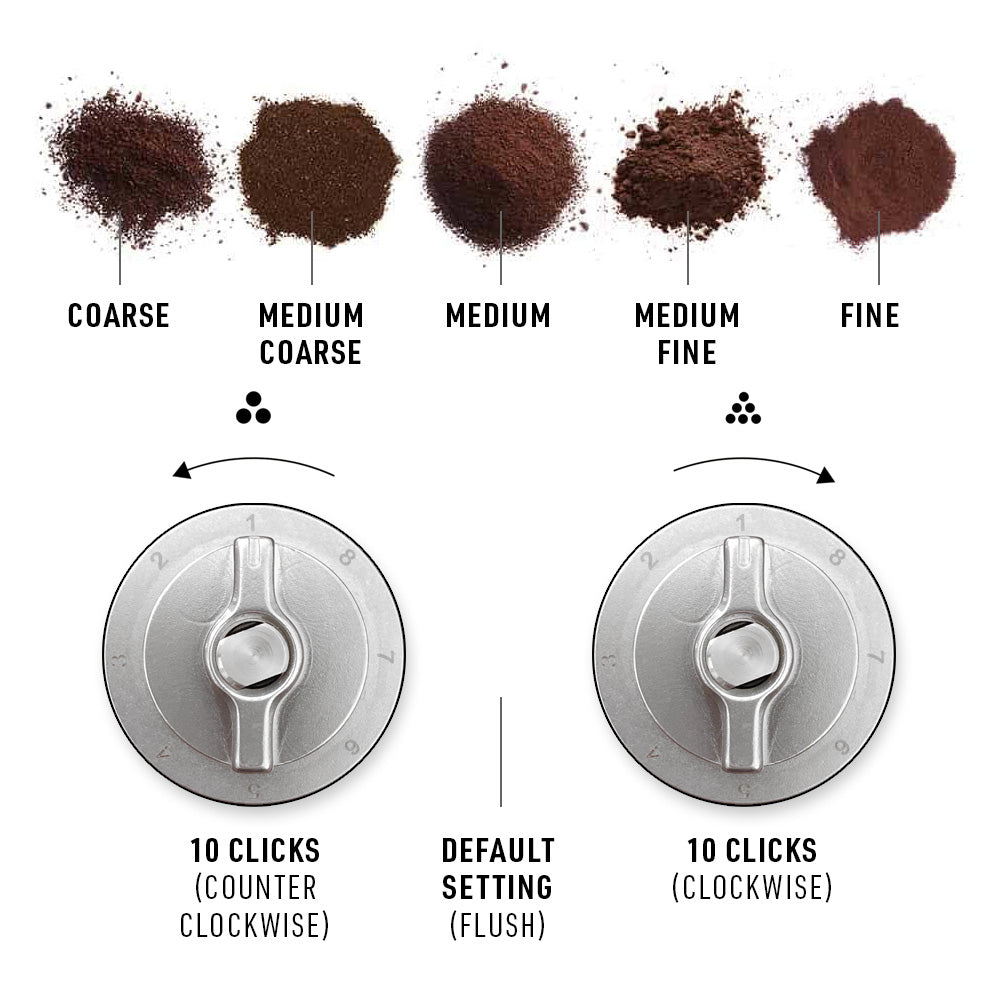
What are coffee grinder clicks in plain terms? They are the audible and tactile notches or detents built into a grinder’s adjustment mechanism. Each click usually represents a small, repeatable change in the distance between burrs or blades, which affects particle size.
Clicks help you repeat settings. They give feedback when you turn a dial or knob. On some grinders a click equals a measurable change in microns; on others it is just a reference. Knowing what are coffee grinder clicks helps you save time and avoid guesswork when dialing in recipes.

Why clicks matter for brewing consistency
Clicks translate rotary movement into repeatable settings. That repeatability is essential for consistency.
- They let you return to a previous grind size after cleaning or recalibration.
- They make small adjustments predictable, which matters for espresso and manual brew methods.
- They reduce the trial-and-error time when switching beans or roast levels.
If you know what are coffee grinder clicks and how many clicks equal a meaningful grind-size change, you can hit target extraction faster. This is especially useful when you chase stable shots across beans and equipment.

How coffee grinder clicks work — mechanics and design
Most clicks come from one of these designs:
- Spring-loaded detent: A ball or pin sits in a groove. Each groove produces a click as it passes.
- Ratchet or gear teeth: Small teeth produce audible steps when the dial turns.
- Magnetic detent: Magnets create a gentle catch and release, producing a soft click.
Internally, clicks change the relative position of the burrs. A tiny turn moves the burrs closer or farther, changing particle size. The exact amount per click varies by grinder model, so one click on one machine may not equal one click on another.

Types of grinders and how their clicks differ
Different grinder categories use clicks differently.
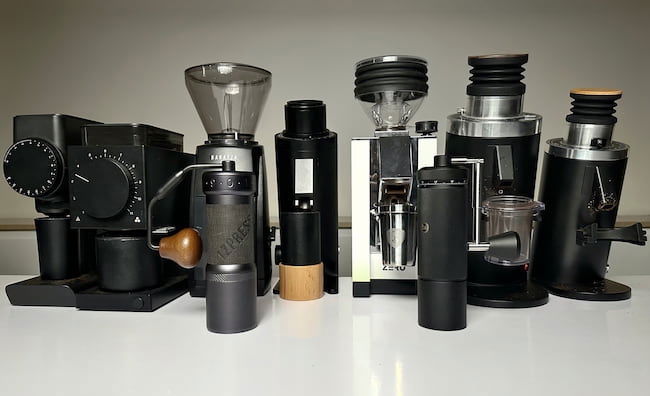
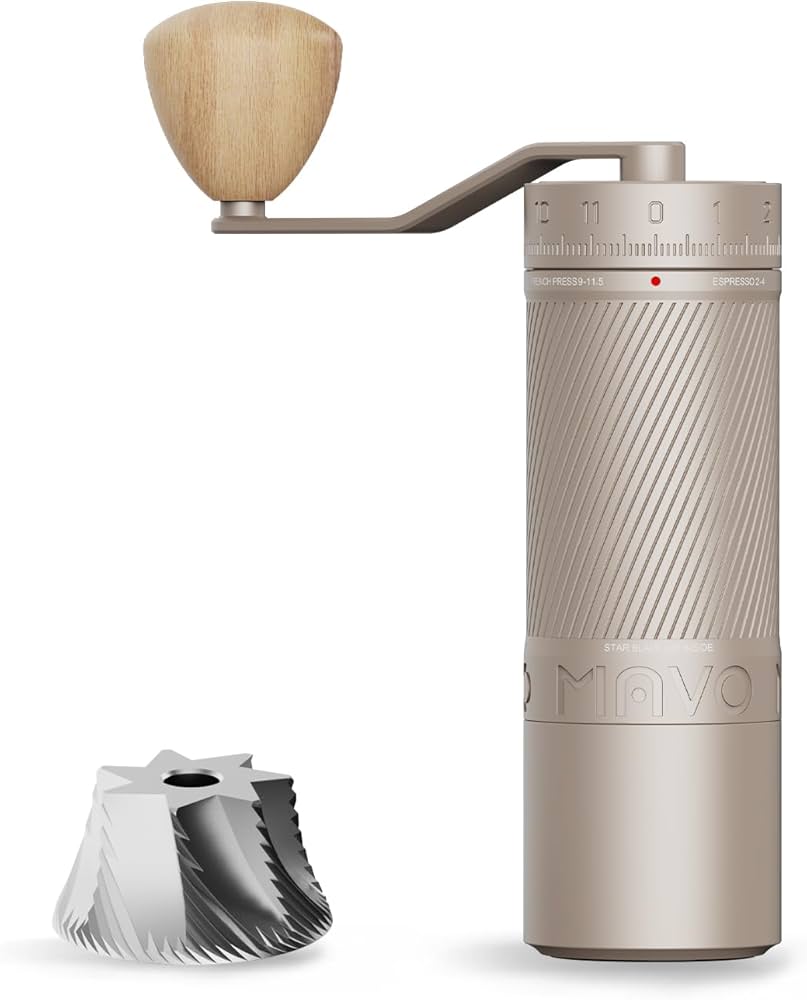
- Manual hand grinders: Often have coarse but distinct clicks for portability and tactile control.
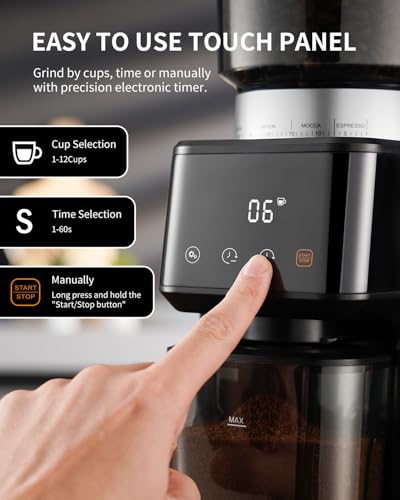
- Entry-level electric grinders: Clicks may be coarse or inconsistent, serving mostly as reference points.
- Prosumer grinders: Designed with finer detents so clicks equal precise micron changes.
- Commercial grinders: Sometimes use micro-adjust systems with many subtle clicks or a stepless design with no clicks.
Understanding what are coffee grinder clicks on your specific model matters. A prosumer grinder might give 100+ clicks between espresso and Turkish grind, while an entry-level model may only offer 10.

Stepped vs stepless: clicks and flexibility
Some grinders are stepped (they have clicks) and some are stepless (no clicks). Each has trade-offs.
- Stepped grinders: Easier to return to settings, great for consistent recipes and home use.
- Stepless grinders: Allow infinite adjustability, favored by pros who want micro-tuning.
If you ask what are coffee grinder clicks, a key follow-up is whether you need stepped control. For most home brewers, clicks are a practical advantage.

How to use clicks to dial in your grind (step-by-step)
Here’s a simple way to use clicks when dialing in espresso or brew.
- Start with a baseline setting that’s recommended for your grinder.
- Pull a shot or brew a test using your usual dose and time.
- If extraction is too fast, move closer by a small number of clicks (usually 1–3).
- If extraction is too slow or bitter, move coarser by a few clicks.
- Record the click setting plus dose and time for future reference.
Small, consistent clicks lead to predictable results. Track changes in a tasting log so you can repeat what works.

Troubleshooting clicks: common problems and fixes
Clicks can help, but sometimes they create confusion. Here’s how to troubleshoot.
- No clicks or inconsistent clicks: Check for wear, loose components, or missing detent springs.
- Clicks change suddenly: Burrs may have shifted; recalibrate and reset zero point.
- Too coarse or fine per click: Adjust your approach by changing the number of clicks you move per test.
If your grinder’s clicks feel wrong, disassemble per the manual or consult a technician. Regular cleaning and burr replacement keep clicks meaningful and steady.
Real-life tips from experience
From years of testing grinders, I learned a few things about what are coffee grinder clicks that saved time.
- Mark a zero point with tape. I mark a baseline so I never lose the starting point during cleaning.
- Count clicks when switching beans. Some beans need two or three extra clicks compared to others.
- Use the same hopper and dose. Changing the hopper or dose changes airflow and can make clicks feel different.
One time I chased a bitter shot and moved six clicks finer, only to find I’d dropped the hopper slightly. The fix was a single click back and a cleaned portafilter. Small mechanical shifts often masquerade as grind problems.

Choosing a grinder: what clicks tell you about quality
Clicks can hint at build quality.
- Precise, consistent clicks often indicate tighter manufacturing tolerances.
- Very loud or sloppy clicks may mean cheaper parts or less refinement.
- A smooth, micro-detent system suggests the grinder is built for fine tuning.
When shopping, ask how many clicks span the range you care about. More usable clicks across a range usually equals more control.
Related concepts: burr types, particle distribution, and microns
Understanding clicks works best with these related ideas.
- Burr type: Conical or flat burrs affect particle uniformity and response to clicks.
- Particle distribution: Clicks change the center of distribution and fines content.
- Microns: Some manufacturers map clicks to micron changes, giving a measurable scale.
Linking clicks to these concepts helps you predict how a change will affect taste and extraction.
PAA-style questions
What are coffee grinder clicks and why do they help with repeatability?
They are detents that mark adjustment steps, making it easy to return to a known grind setting. This helps you reproduce recipes.
Do all grinders use clicks?
No. Some grinders are stepped with clicks, while others are stepless and rely on continuous adjustment.
How many clicks equal a major change?
It depends on the grinder. For many home grinders, 1–3 clicks is a small tweak; 5–10 clicks is a noticeable change.
Can clicks wear out over time?
Yes. Springs, balls, or grooves can wear, causing inconsistent clicks. Regular maintenance prevents this.
Are clicks the same as grind calibration?
Clicks are part of calibration but not the whole process. Calibration includes burr alignment, zeroing, and mapping clicks to brew outcomes.
Frequently Asked Questions of what are coffee grinder clicks
What exactly are coffee grinder clicks?
They are the audible and tactile notches on a grinder’s adjustment mechanism that indicate fixed steps. Clicks help you make repeatable grind-size changes.
Do clicks equal a fixed micron change?
Not always. Some manufacturers map clicks to microns, but many do not, so the change per click varies by model. Test your grinder to learn its scale.
Should I prefer stepped or stepless grinders?
Stepped grinders with clicks are easier for most home users. Stepless grinders offer more flexibility but require more skill.
How do I count clicks when dialing in?
Start from a marked zero point and count clicks from there. Record settings alongside dose and time to repeat recipes reliably.
What if my grinder has inconsistent clicks?
Inconsistent clicks may mean worn parts, loose screws, or dirt. Clean and service the grinder or consult a technician.
Conclusion
Understanding what are coffee grinder clicks gives you a practical tool to make coffee more consistent and repeatable. Clicks turn vague adjustments into measurable steps, reduce guesswork, and speed up dialing in shots. Try marking a zero point, counting clicks when you change beans, and keeping a short log of settings to build a reliable routine. If you enjoyed this guide, leave a comment with your grinder model, subscribe for more tips, or share your favorite click-to-cup discoveries.